Earth Day Reflections on Gardening and Sustainable Landscaping
Admittedly, for a sustainable living website, gardening is not a specialty. Well, for one of us at Green Trotter, that is. My “green thumb” is more aspirational than well‑preserved. For the longest time, I’ve held a vision of an indoor vertical garden in the kitchen, or of buying a plot in a community garden where I could learn from resident experts. I would research “plants for beginners” and bring a few home, only to fall short.
This Earth Day, it feels fitting to share a few harvesting tips, whether you’re buying plants or growing them. Because I am far from an expert, I sought out a few reputable sources for guidance on the soils, light, and nutrients needed to take a “plant beginner” to the next level.
One quick shout-out to a form of landscaping that has become increasingly trendy and an art form. Focused on thoughtful plant selection and intentional design, zeroscaping prioritizes low‑ to no‑water needs while still creating visually engaging outdoor spaces. For property owners looking to reduce maintenance and conserve resources, it offers a practical alternative to traditional lawns without sacrificing curb appeal. Xeriscaping combines both plant life and rock and gravel indigenous to the environment.
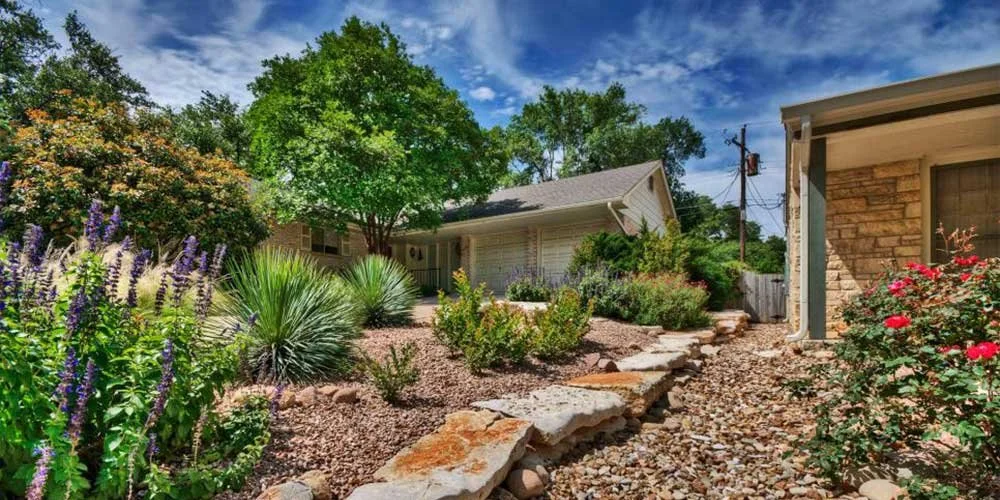
Example of Xeriscaping, a type of landscaping that incorporates colorful plants. Zeroscape focuses more on rock and gravel.
The Key Ingredients to a Bountiful Garden or Indoor Plants
Soil
For both potted plants and garden beds, Moana Nursery, a treasured nursery in Reno, Nevada, emphasizes the importance of matching soil to a plant’s natural habitat. For high desert climates, like Northern Nevada, the soil tends to be clay and others sand and loam.
Soil may need a boost at time. Moana Nursery advises focusing on aeration, moisture, and drainage to keep your soil thriving. What is dubbed a “game-changer” for gardeners, is Instant Compost Tea. This liquid fertilizer gives your plants and soil a healthy dose of nutrients. The organic matter of composted tea is said to improve soil structure and promote sustained health.
Light
The highlight of Life Sciences class in middle school was by far photosynthesis. A plant’s life depends on it – light. I remember monitoring my seedling at home, and the excitement of watching the stem poke out from the soil was a little rush. But not all light is created equal (maybe this is where the deficient “green thumb” stems from...). Light requires intensity (low, medium, high), quality (blue light, red light, or full spectrum), and duration (even plants need some rest). Luckily, most plant seed packages or labeling cite the plant’s light requirements. For good measure, the University of Maryland Extension recommends a digital light meter for indoor plants. Just like water, plants suffer under too much light or not enough. One big error I’ve made is giving indoor plants some outdoor time. Per the Extension, that’s a No-No, “Moving indoor plants back inside after spending the summer outside can cause leaf drop and yellowing. An example is weeping fig (Ficus benjamina) that can experience significant leaf drop. It takes time for plants to adjust to lower light conditions inside homes.” The infographic below aides in determining light intensity in relation to plant placement in west or south facing window.
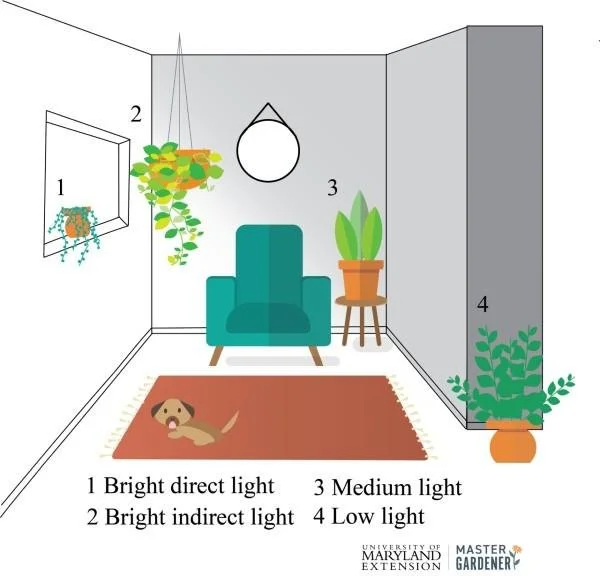
Source: University of Maryland Extension
Water
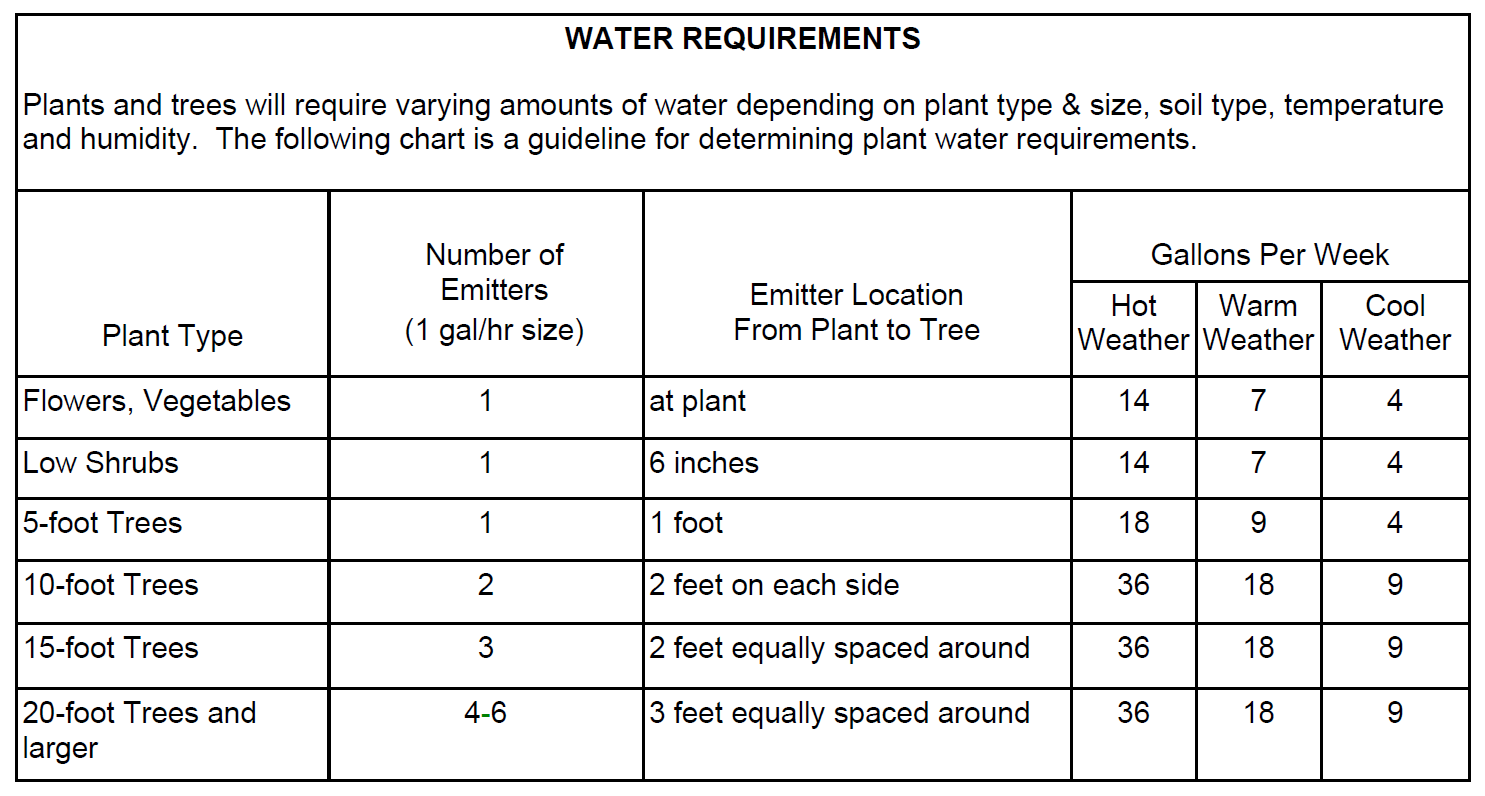
In drier climates, irrigation systems are essential and drip systems are the most efficient. According to experts at Moana Nursery, “Drip systems can be operated any time because they avoid water loss due to evaporation and runoff. Drip should be checked frequently to insure emitters are not plugged and to see how far and deep water infiltrates in an hour. Drip emitters must be moved or more emitters added as the plant matures and roots extend beyond the planting site.”
The table below offers a quick reference of water proportion to the plant. Source: Moana Nursery.
Pesky Flies (Fruit Flies or Fungus Gnats)
When infestation has occurred, the first step is to isolate the plant to prevent spreading to other plants. During this separation, treat the plant before eggs are laid by placing a bowl of Apple Cider Vinegar and up to 3 drops of liquid dish soap near the plant(s). Cover the bowl in wrap and poke small holes, the smell will draw the flies. Alternatively, place yellow sticky traps near the flies for trapping. Or watch the circle of life by placing a carnivous plant such as a Venus Fly Trap or Pitcher Plant for absorbing the flies.
Fend off flies and gnats by surrounding your indoor plants with basil, mint, lavender, or rosemary. Apparently, flies and gnats can’t handle the aromatic smells.
Resuscitate
To revive a plant due to an infestation, sprinkle ground cinnamon on the soil surface and it goes to work eliminating the fungi that the larvae feed on. If there is no cinnamon in the cupboards, wait for the topsoil to completely dry before watering, drying out the larvae.
For a plant experiencing soil rot, the first step is to assess the damage, carefully. Gently remove the plant from the pot and remove the contaminated soil. What to look for? If the roots are brown, black, or mushy, you’ve got decay. Cut away the damaged roots, leaving only the healthy white roots. Cure the remaining healthy roots with cinnamon powder to ensure all potential fungi is removed.
If you plan to reuse the same pot, it must be sterilized. Treat the pot with 1:1 hydrogen peroxide and water and wait 15 minutes to remove remaining bacteria. Place the plant into the same pot or if a new one with fresh soil. You may need to use a smaller pot to accommodate fewer roots.
At the end of the day, sustainability starts with curiosity and a willingness to try. Whether that means keeping a few beginner‑friendly plants alive, learning from trusted sources, or rethinking outdoor spaces through practices like zeroscaping or Xeriscaping, each step builds toward a more intentional way of living. This Earth Day, the goal isn’t to have it all figured out, but to keep growing. Consider choices that support both our homes and the environment around us.