Decorating with Stone, Wood, and Clay for a Minimal Eco‑Friendly Home
Some of the most enduring pairings come in threes. In many Native American traditions, the “Three Sisters” are corn (maize), beans, and squash. In Nevada, I lean on a different natural trio: stone, wood, and clay for a modern, green space.
If you’ve ever stood in a beautifully minimal room and wondered why it feels so calm, chances are, texture is doing a lot of the heavy lifting. The type of material texture found in cool stone surfaces that catch the light, the warmth of wood grain, a softly matte clay vase that looks like it was formed by hand, because it was.
As an eco-stylist, I’m always looking for ways to make a home feel grounded and lived in. Stone, wood, and clay are my go-to trio for creating that “minimal but not sterile” feeling. They age beautifully and when you use them intentionally, they become the décor.
Below, I've offered a few suggestions on how to think about each material, how to combine them, and where they make the biggest impact in a minimal eco-friendly home.
Why stone, wood, and clay work so well in minimal spaces
Minimalism isn’t about empty rooms; it’s about fewer, better choices. Natural materials fit perfectly because they bring depth without visual noise. Instead of relying on lots of objects, you let the surface and finish provide interest.
They also align with eco-friendly values: these materials can be long-lasting, repairable, and often sourced reclaimed or locally. You want to buy intentionally.
Here’s your quick mindset shift: in a minimal home, texture replaces clutter. One beautiful stone ledge can do the job of five decorative items. A single handcrafted clay lamp can add soul where a pile of trendy accessories never will.
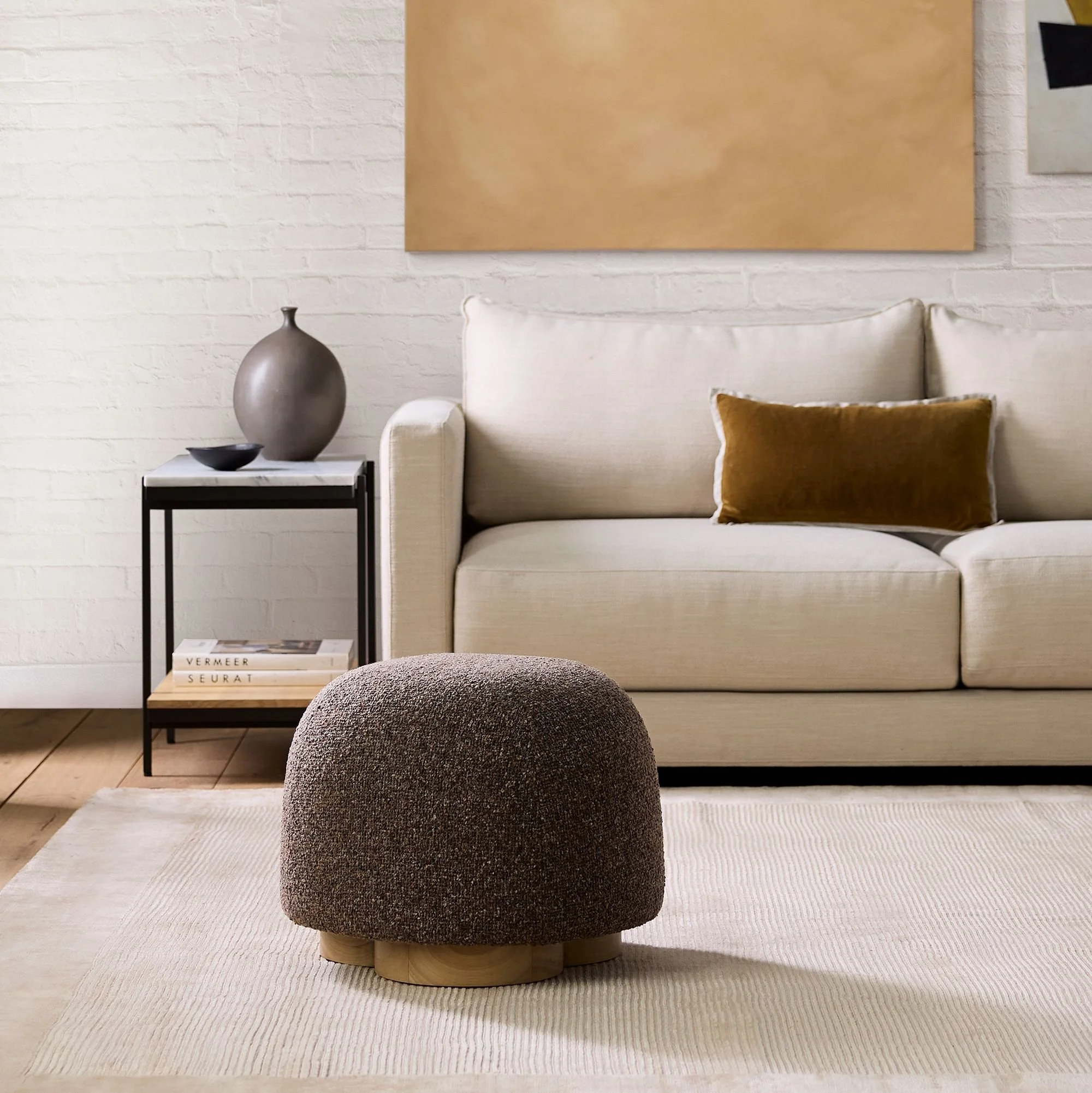
West Elm Sustainability Collection
4 guiding principles (before you buy anything)
Before getting into specific ideas, here are the rules I use when styling with natural materials to achieve a clean, minimal look:
Choose real over faux when you can. Faux finishes often look okay at first…and then wear poorly. Real materials usually develop patina, not “damage.”
Limit the palette. Pick one dominant material, one supporting material, and one accent. (You can repeat them, but keep the cast tight.)
Prioritize touch points. Put your budget and attention where your hands and eyes go every day: a countertop edge, a shelf, a stool, cabinet pulls, a tray by the sink.
Keep it low-tox. Minimal and eco-friendly means thinking beyond looks. Choose low-VOC finishes, be mindful of sealants, and avoid “mystery coatings” when possible.
Stone: cool, grounding, timeless
Stone is your anchor piece. Even a small dose can make a space feel more grounded, more permanent, and less trend-driven.
Where stone works best
You don’t need to clad an entire wall in marble to benefit from stone. I love stone in these spots:
Entryway landing zone: a stone tray or slab for keys
Kitchen: a simple backsplash strip, a stone board you keep out
Bathroom: a stone ledge, shelf, or countertop detail
Living room: a hearth surround, a side table top, or a heavy stone bookend (just one!)
Finish matters more than people realize
For minimal homes, I typically lean toward honed or matte finishes. They read softer and more natural than high polish, and they play well with wood and clay.
Eco-friendly stone tips
Stone can be sustainable when it is sourced ethically and cut to scale. Here are a few ways to keep it greener:
Ask for remnants/offcuts from fabricators (great for shelves, ledges, trays)
Consider reclaimed stone when available
Look for local options to reduce transport impacts
If you’re renovating, explore thinner stone applications where appropriate
Balance the stone’s strength with these softer touches:
soft textiles (linen, wool, cotton)
warm wood tones
rounded clay forms to soften sharp edges
The goal is balance: stone gives structure; the other materials bring warmth and human-scale comfort.
Wood: warmth without visual noise
If stone is the anchor, wood is the welcome party. Wood brings warmth instantly, and in minimal spaces, it can prevent that “showroom” feeling.
Best wood moments in a minimal eco home
A simple bench or stool (functional + sculptural)
Floating shelves with clean lines
Built-ins that replace bulky furniture
A mirror or art frame in natural wood
Small repetitive details like matching pulls or hooks
Grain and tone: keep it calm
For a minimal look, I usually choose woods with:
quieter grain (or at least consistent grain)
matte finishes (shiny wood often reads more formal or dated)
tones that don’t fight the room’s natural light
If your space already has warm light (or warm floors), lean warm. If it’s cooler and bright, you can go lighter or more neutral. Avoid mixing wildly different undertones without a “bridge.”
Eco-friendly wood tips
Wood is one of the best places to be intentional, because “wood” can mean a lot of things. Look for:
FSC-certified (or other responsible forestry certifications)
reclaimed or salvaged wood when possible
solid wood over fragile veneers if you want longevity
durable, repairable finishes (I love oils and hardwax oils in many applications)
And don’t underestimate the greenest move of all: using what you already have, refinishing it, or simply changing the hardware to simplify the look.
Clay: soft, handmade texture (without clutter)
Clay is the secret ingredient for delivering a soft, handmade feel.
Where clay shines
A single vessel (vase, bowl, pitcher) on a console or shelf
Planters (especially in warm, matte terracotta tones)
Lighting: a clay lamp base adds instant warmth
Tile (if you’re renovating): earthy, matte, tactile
Everyday ceramics you actually use, displayed simply
Clay is especially good at absorbing light rather than bouncing it around, which makes a space feel calmer.
Eco-friendly clay tips
Buy from local makers when you can
Choose durable, everyday pieces (the most sustainable object is the one you keep using)
Avoid buying lots of small décor—pick one signature piece per zone
My styling rule here is simple: one handmade clay piece is soulful; five becomes a collection. Unless you’re intentionally curating shelves (and willing to dust them), keep it minimal.
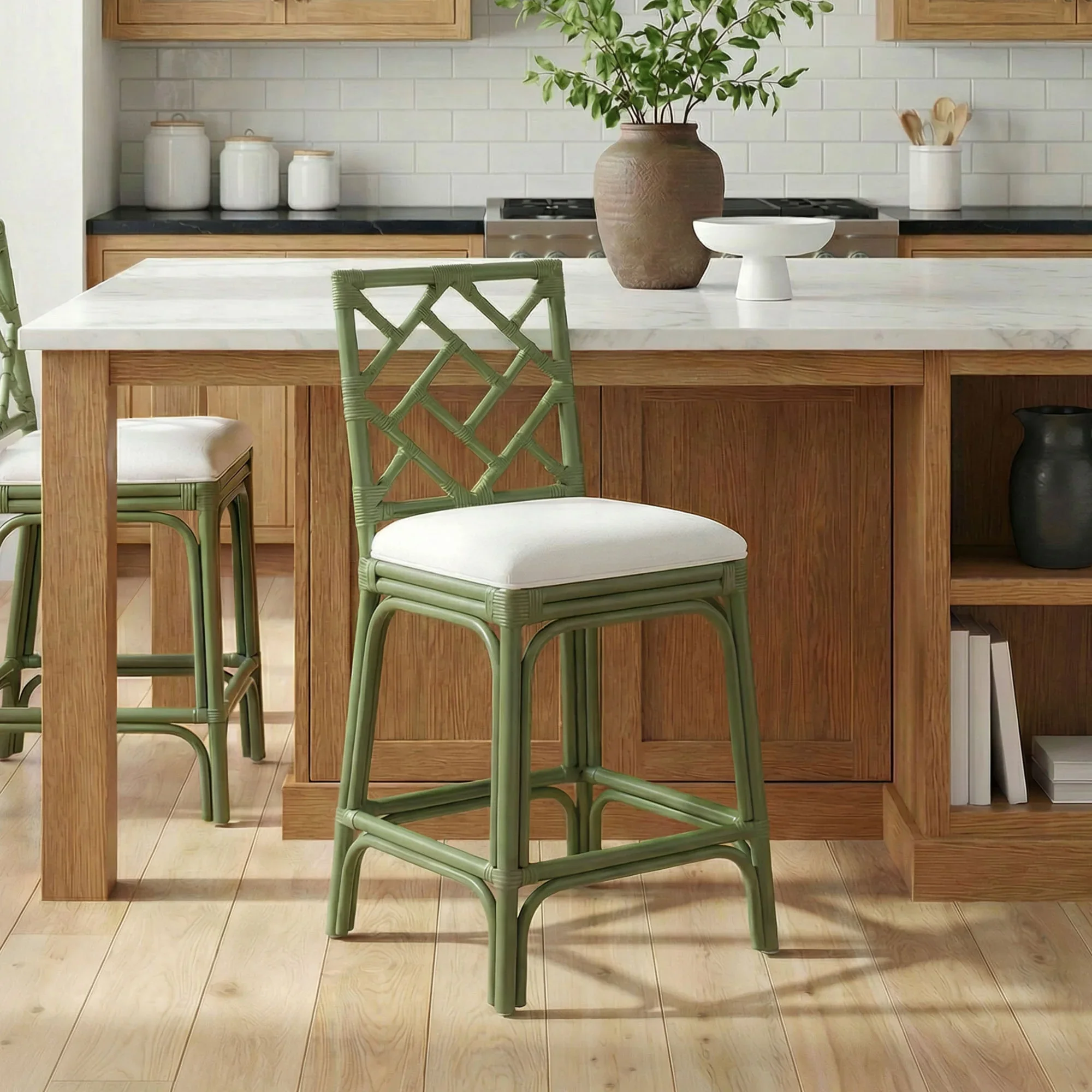
East at Main
How to combine stone + wood + clay (3 easy formulas)
If you’re wondering how to mix these without your home turning “rustic” or overly themed, start with one of these combinations:
1) Stone base + wood warmth + clay accent
Stone: a ledge, tray, side table, or backsplash
Wood: seating or shelving
Clay: one vase or lamp
This is the most classic minimal formula: grounded, warm, and quietly textured.
2) Wood-dominant room + stone punctuation
Wood: floors + a simple piece of furniture
Stone: one “punctuation mark” (tray, board, tabletop)
Clay: ties it together with softness
Great for small apartments or rooms where you want the warmth of wood to lead.
3) Clay-forward styling + neutral stone + light wood
Clay: vessel + lamp or planter
Stone: neutral, matte, subtle
Wood: light, clean-lined, not too rustic
This is perfect if you love that earthy, modern, slightly Mediterranean feel—still minimal, still calm.
Recap
Hard + warm + matte: stone (hard), wood (warm), clay (matte)
Repeat shapes: if your stone piece is angular, pick a rounded clay form
Keep lines simple: minimalism comes from silhouettes as much as quantity
Budget-friendly, low-waste ways to get the look
You do not need a renovation budget to bring in natural materials.
Ask for stone remnants
Shop salvage for wood benches, stools, and shelves
Invest in one beautiful clay piece instead of many “filler” items
Try a clay or limewash-style paint if you want the look of earthen walls without major construction (test for compatibility and ventilation)
One eco-styling mindset I recommend: buy the piece you’ll still love in five years. Minimalism is easier when you’re not cycling through décor.
Caring for natural materials (so they last)
Eco-friendly design is also maintenance-friendly design. These materials can last ages when cared for simply.
Stone: use gentle cleaners; seal if appropriate for the type of stone and location
Wood: choose finishes that can be spot-repaired; avoid soaking and harsh chemicals
Clay/ceramics: treat handmade pieces as everyday durable objects—just be mindful of edges and hard knocks
In a minimal home, patina often becomes part of the beauty.
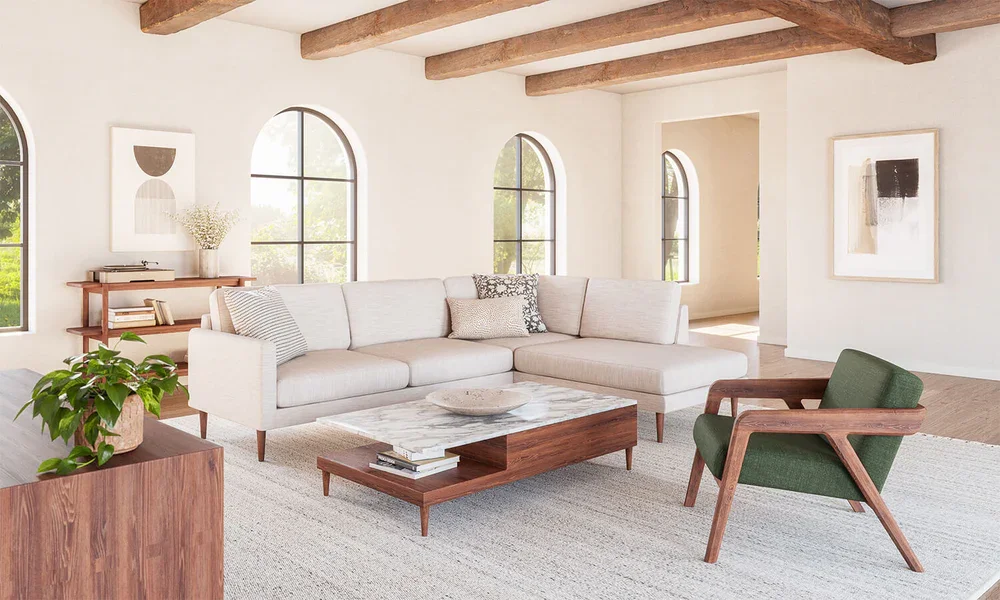
Medley
Final thought: start with one surface, one piece, one repeat
If you’re not sure where to begin, here’s my simplest recipe: pick one natural material to introduce as a surface (even a small one), add one object with presence, and repeat that tone once elsewhere.
Stone, wood, and clay quietly shift how it feels to live there. Calm. Grounded. Warm. And, ideally, a little more connected to the natural world.